22 July 2026


Islamic Bank of Thailand (ibank) continues to strengthen the role of Islamic finance through the promotion of Value-Based Banking, bringing its vision from the global stage to Thailand’s Halal ecosystem. Following its participation at the International Conference on Islamic Economics and Finance for Sustainable Development (IFESDC) 2026 at the World Bank Headquarters in Washington, D.C., United States. ibank further expanded the discussion through Grand Halal Bangkok 2026 and Mega Halal Bangkok 2026, fostering collaboration among the financial sector, Halal businesses, and Halal certification authorities to strengthen Thailand’s Halal ecosystem and enhance the country’s position in the global Halal economy.
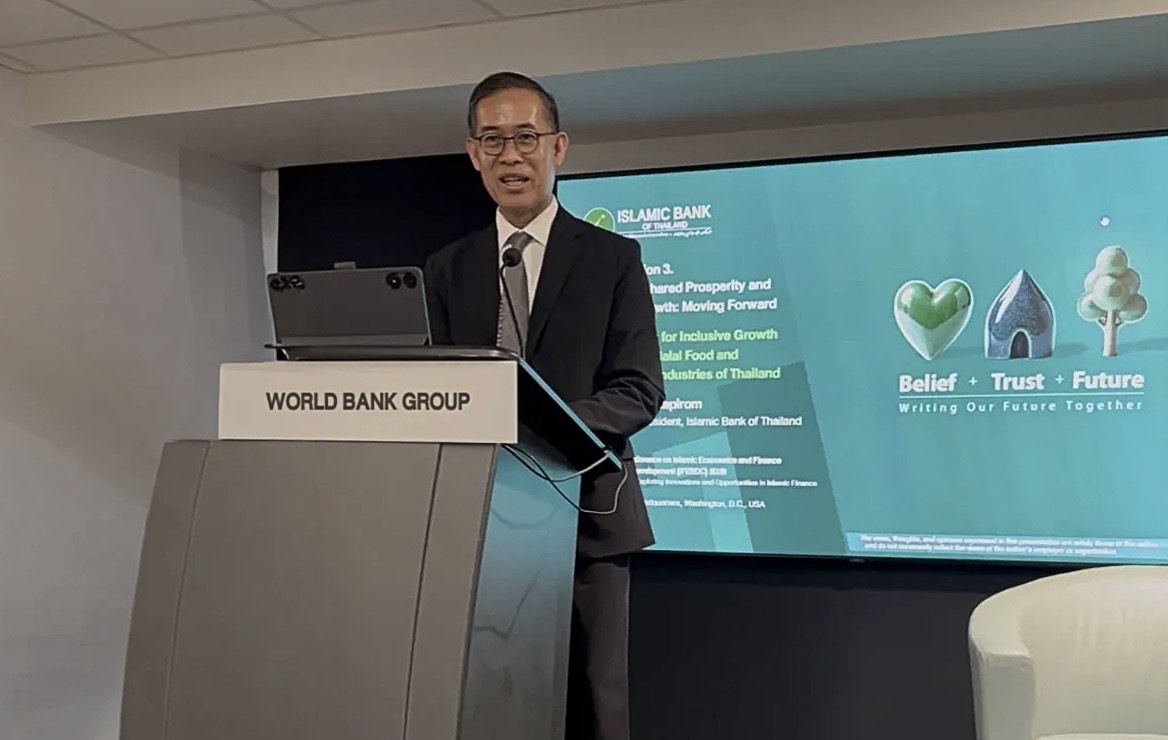
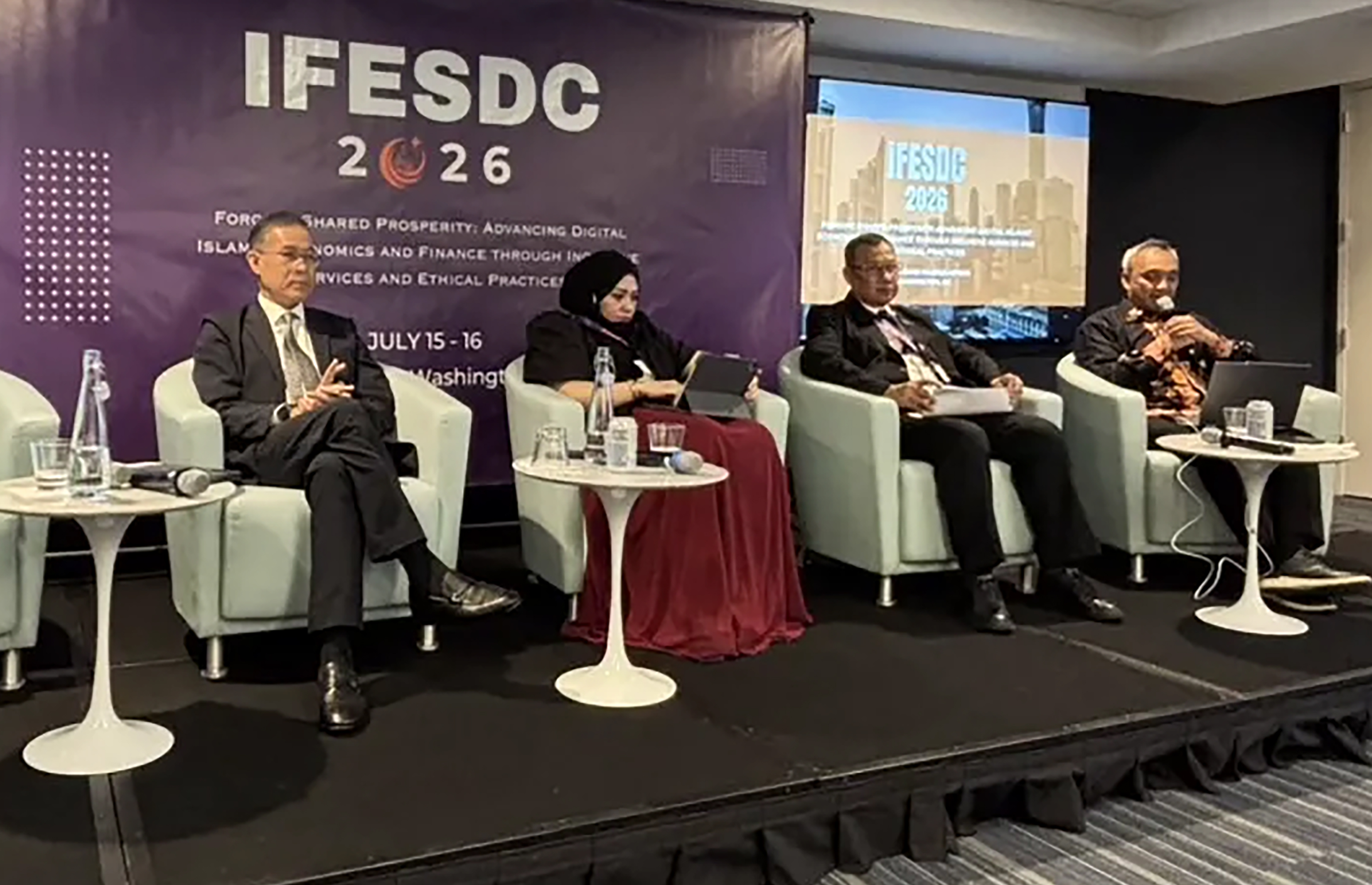
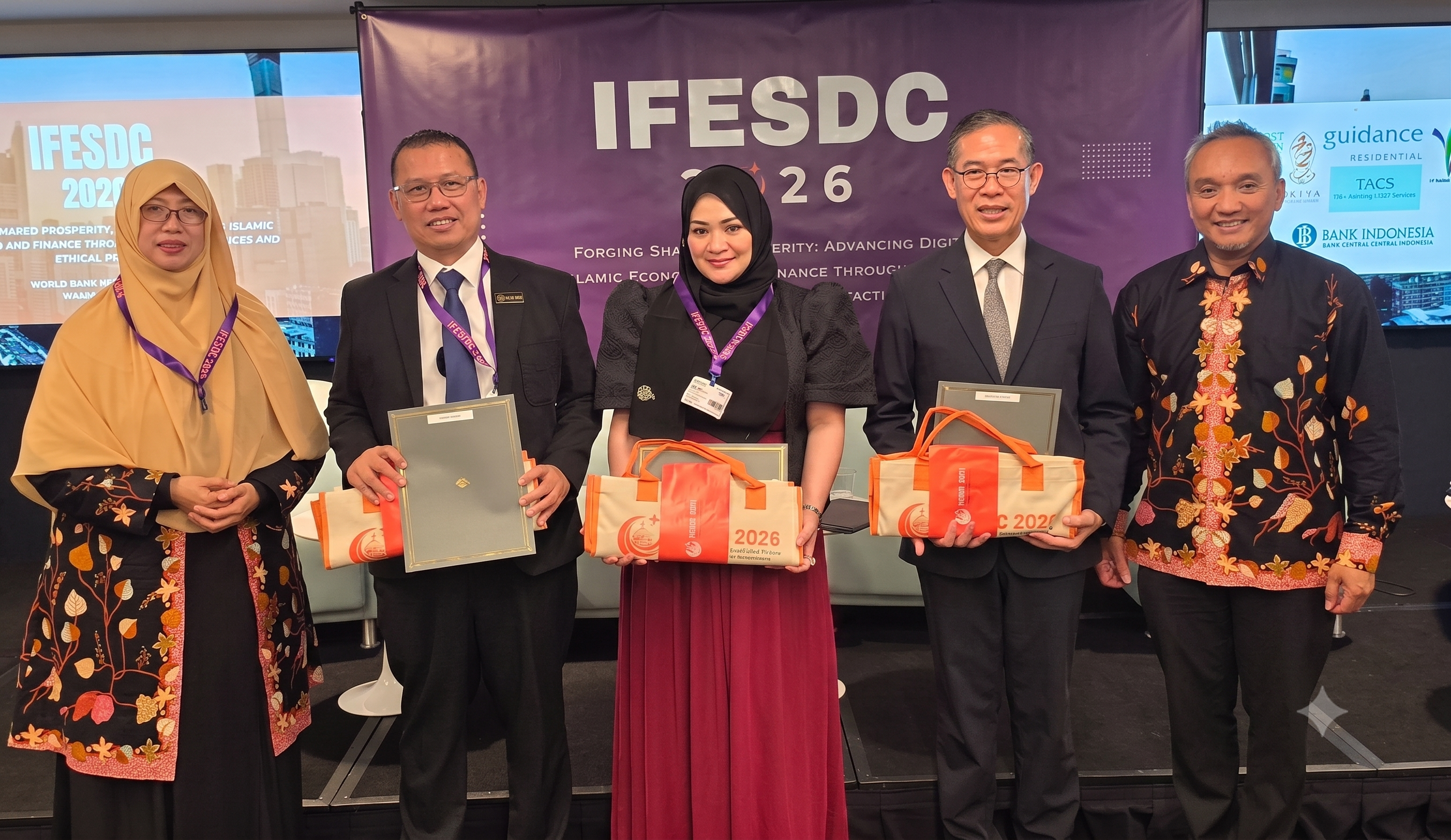
Dr. Thaweelap Rittapirom, Director and President of the Islamic Bank of Thailand, participated in the International Conference on Islamic Economics and Finance for Sustainable Development (IFESDC) 2026, jointly organized by the Indonesian Muslim Association in America (IMAAM), Tazkia University, and Sakinah Finance, with the support of the Executive Director of the Southeast Asia Voting Group (EDS16) at the World Bank Group. The conference was held on July 15, 2026, at the World Bank Headquarters in Washington, D.C., United States. During the conference, Dr. Thaweelap served as a panelist in the session “Promoting Shared Prosperity and Inclusive Growth: Moving Forward,” where he delivered a presentation on “Global Market for Inclusive Growth Opportunity: Halal Food and Agri-business Industries of Thailand”, he shared ibank’s vision of transforming from Thailand’s full-fledged Islamic bank into a key catalyst for Shared Prosperity and Inclusive Growth through Value-Based Finance, a model that seeks to generate positive economic, social, and environmental impact while remaining firmly rooted in the objectives of Maqasid al-Shariah.
Dr. Thaweelap highlighted ibank’s ongoing transformation toward a self-sustaining Islamic banking model through digital innovation, customer-centric services, and the integration of Value-Based Finance into Thailand’s strategic economic sectors. The Bank aims to strengthen Thailand’s Islamic finance ecosystem while supporting long-term economic growth through responsible and inclusive finance.
Looking ahead, ibank will continue prioritizing strategic sectors with strong growth potential, including the Halal food and agribusiness industry, Halal tourism, and SME development. Beyond providing financial solutions, the Bank seeks to empower entrepreneurs by enhancing business capabilities, encouraging innovation, improving competitiveness, and creating positive social impact throughout Thailand’s Halal value chain.
During the conference, Dr. Thaweelap also presented successful Thai business case studies, including OVO Foodtech, an innovation-driven Halal egg processing company, and Fatherman Group, a value-added fruit and vegetable processor. Both companies demonstrate how Islamic finance can support innovation, strengthen agricultural value chains, empower local farmers, and expand Thailand’s Halal food exports to international markets.
Dr. Thaweelap emphasized that advancing Thailand’s Islamic finance ecosystem requires close collaboration among financial institutions, government agencies, the private sector, and international partners. Such cooperation will strengthen Thailand’s connectivity with ASEAN, the Gulf Cooperation Council (GCC), and the broader global Halal economy while positioning the country as a regional hub for Islamic finance and Halal industries.
Bringing the Vision to Thailand’s Halal Ecosystem:
Building upon the vision shared at the international conference, ibank extended the conversation to Thailand through panel discussions held during Grand Halal Bangkok 2026 and Mega Halal Bangkok 2026 under the theme: “Value-Based Banking: Banking for People, Planet and Prosperity.”
The discussions brought together representatives from three key pillars of Thailand’s Halal ecosystem—the financial sector, Halal businesses, and Halal certification authorities—to exchange perspectives on how Islamic finance can create shared value and contribute to a stronger and more sustainable Halal ecosystem.
At Grand Halal Bangkok 2026, Mrs. Nuchjaree Pakdeecharoen, Executive Vice President, Head of Retail Banking Group of the Islamic Bank of Thailand, joined Ms. Nayna Lehteemolor, General Manager of Thaweechai Food Manufacturing Co., Ltd., and Mr. Katawut Laomud, Head of International Affairs and Public Relations, Halal Affairs Division, The Central Islamic Council of Thailand, to discuss the complementary roles of finance, business, and Halal standards in strengthening Thailand’s Halal industry.
Meanwhile, at Mega Halal Bangkok 2026, Mr. Teera Yeegob, Executive Vice President, Head of Branch Banking Group of the Islamic Bank of Thailand, shared the stage with Mr. Surapol Kaophuthai, General Manager of SW Food Tech Co., Ltd. and OVO Foodtech Co., Ltd., together with Mr. Damrongsak Abdulsalam, President of SPC Factory All Supply Co., Ltd. and President-elect of the Thai Muslim Trade Association (TMTA). The panel explored how businesses can adopt value-based principles to strengthen competitiveness while creating positive impacts for society and the environment.
The discussions reaffirmed that Value-Based Intermediation (VBI) is not solely a banking concept but a business philosophy that can be embraced by every stakeholder within the Halal ecosystem. By integrating value creation into business operations, organizations can deliver sustainable benefits to customers, employees, communities, and the environment while enhancing long-term competitiveness.
Looking Ahead:
As part of its ongoing commitment to advancing Islamic finance, ibank will jointly host the international conference “Islamic Finance: From Crisis Resilience to Transition Finance” with IFESDC on October 14, 2026 in Bangkok. The conference is one of the Thai Government’s Affiliated Programs supporting Thailand’s hosting of the 2026 Annual Meetings of the International Monetary Fund and the World Bank Group, reflecting the country’s commitment to strengthening international cooperation in Islamic finance and sustainable development.
“Sustainable growth of the Halal economy cannot be achieved by financial institutions alone. It requires collaboration among businesses, Halal standard authorities, government agencies, and strategic partners. ibank is committed to serving as a catalyst by connecting finance, knowledge, and partnerships to build a stronger Halal ecosystem and position Thailand as a regional hub for Islamic finance and Halal industries,” Dr. Thaweelap concluded.