21 May 2025


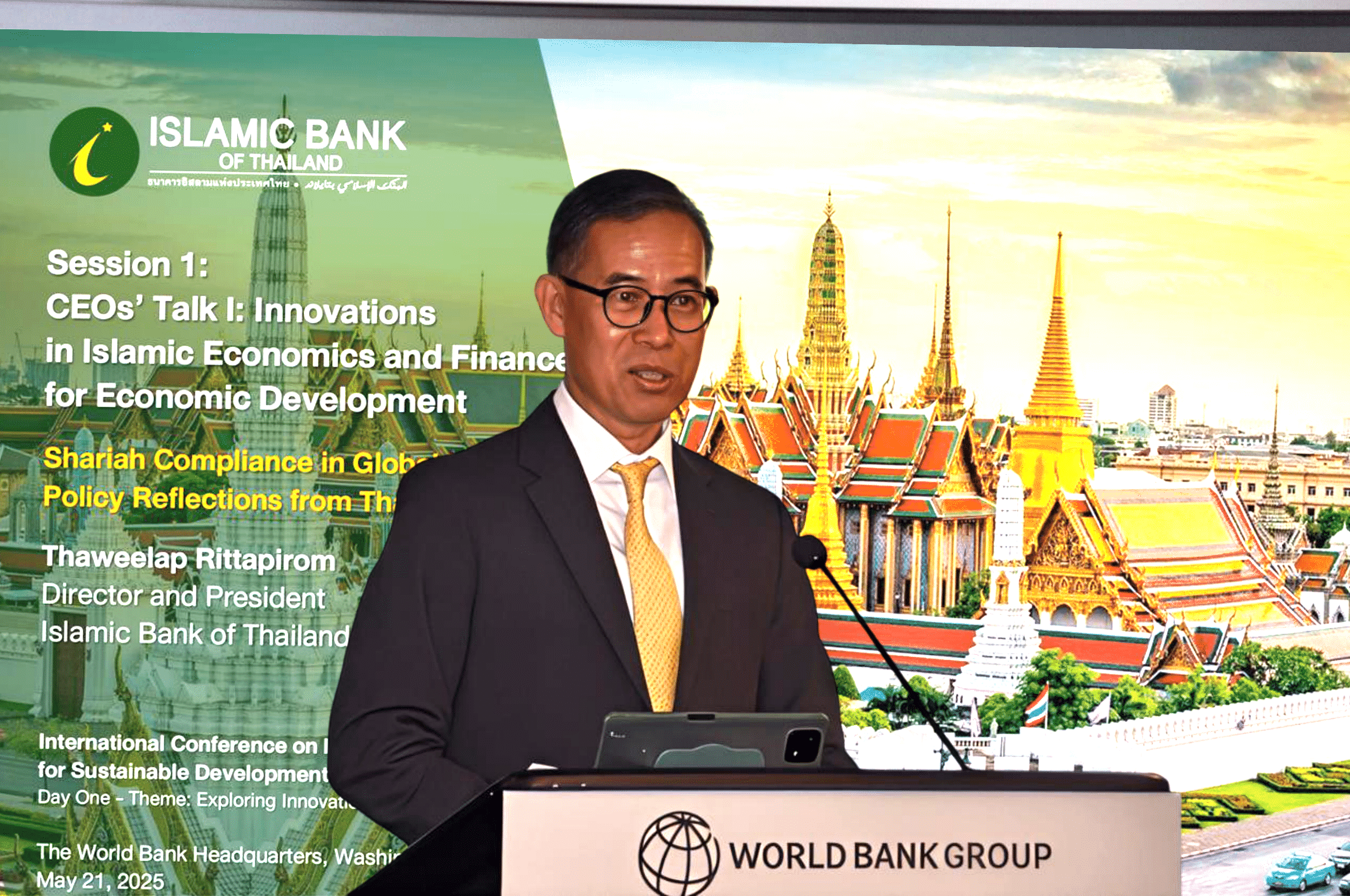
The Islamic Bank of Thailand (ibank), represented by Dr. Thaweelap Rittapirom, Director and President of the Bank, participated as a representative of state-owned enterprises under the Ministry of Finance of Thailand in the prestigious international academic forum, the International Islamic Economics and Finance Conference for Sustainable Development (IFESDC) 2025. The event was held recently at the World Bank Headquarters in Washington, D.C., USA.
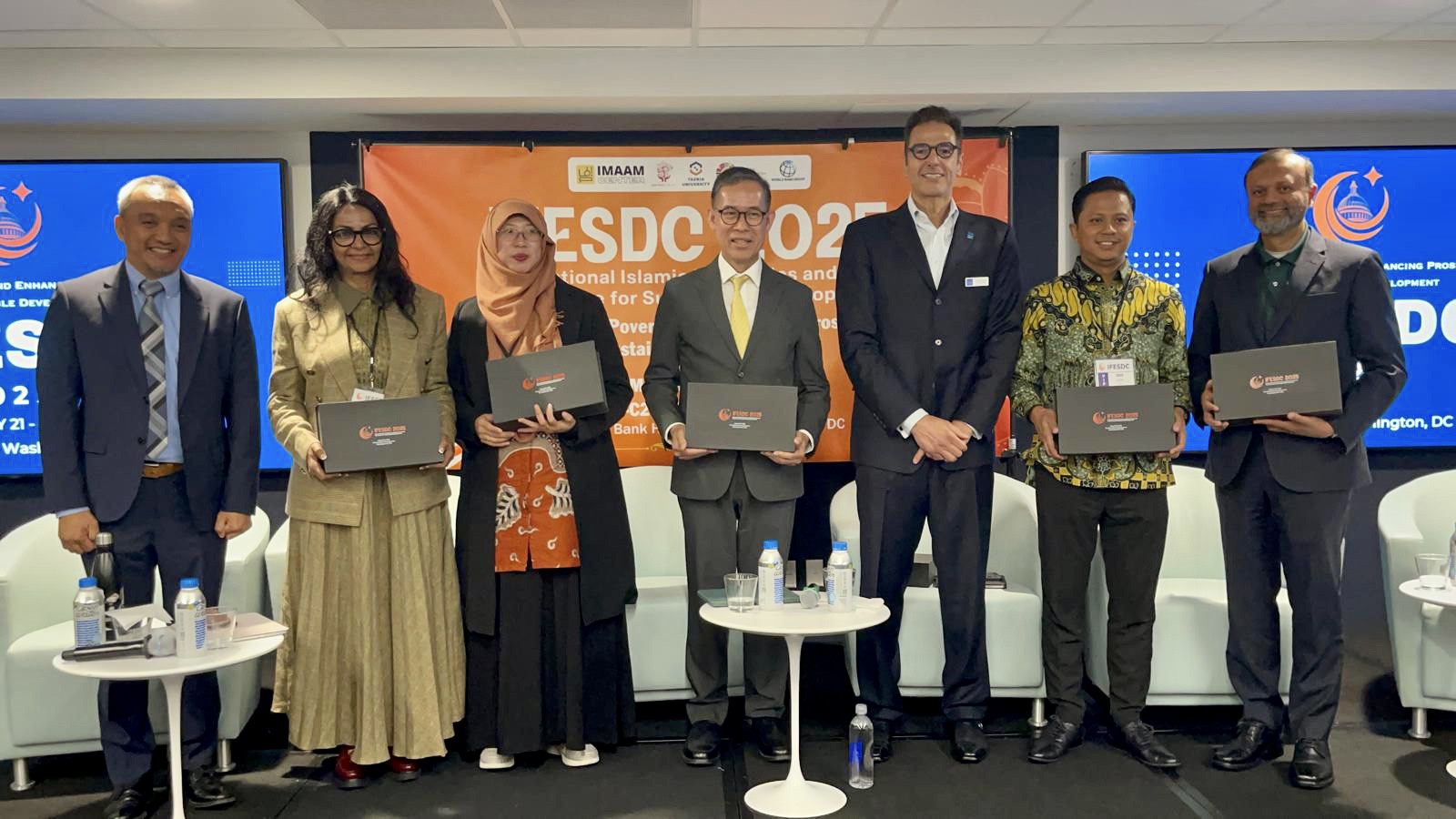
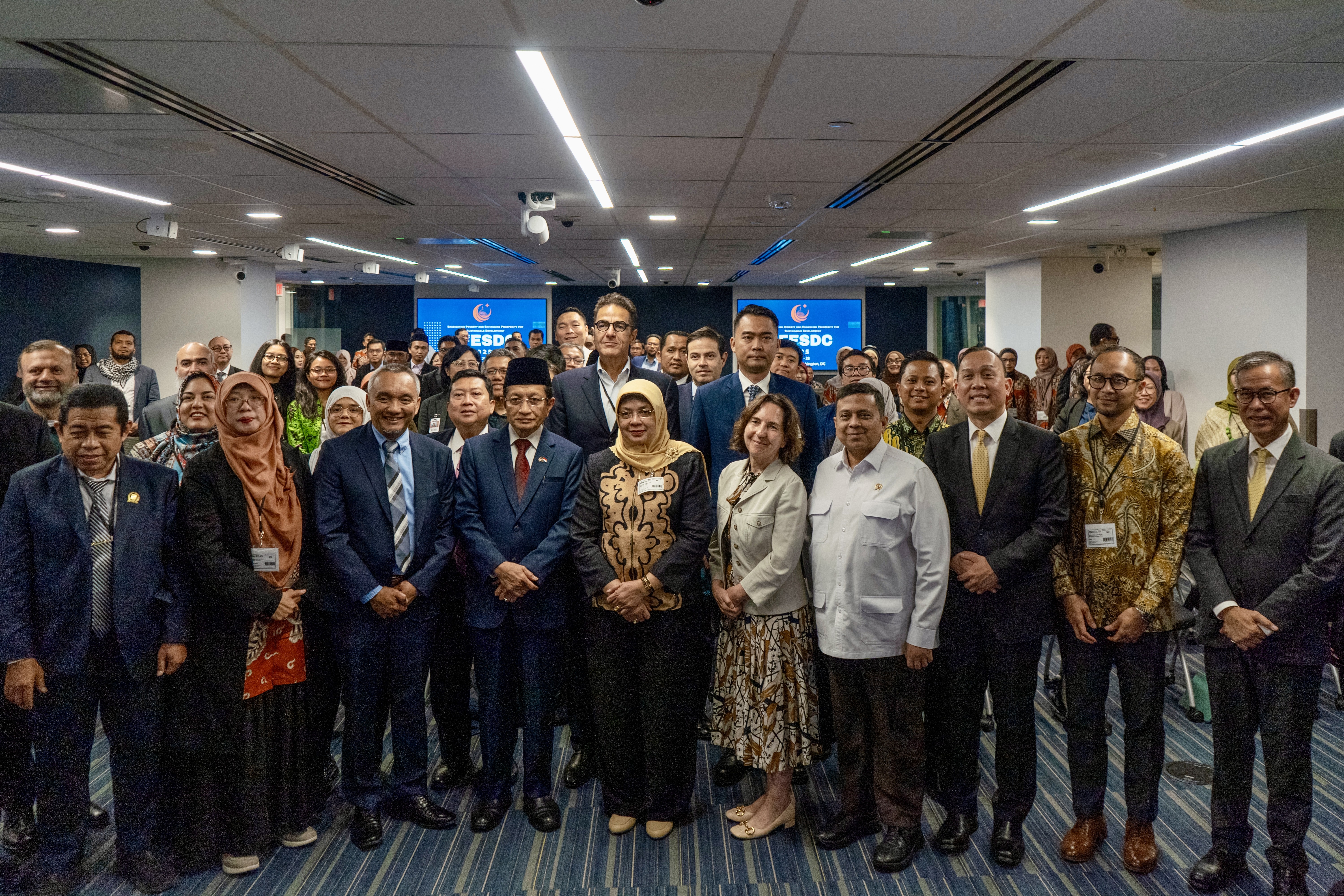
Organized in collaboration with the Indonesian Muslim Association in America (IMAAM), Tazkia University, and Sakinah Finance, and supported by the Executive Director of the Southeast Asia Voting Group, the World Bank Group (EDS16), the conference was held under the theme of “Eradicating Poverty and Enhancing Prosperity for Sustainable Development.” The forum aimed to highlight the role of Islamic economics and finance in addressing global challenges such as poverty, inequality, and environmental crises. More than 200 participants from 11 countries attended the event, including academics, religious leaders, policymakers, and executives from countries such as the United States, Indonesia, Malaysia, Brunei, Thailand, Pakistan, and Saudi Arabia. The conference featured research presentations, policy dialogues, and keynote speeches by leading figures, including Dr. Sri Mulyani Indrawati, Minister of Finance, Republic of Indonesia; Prof. Dr. Nasaruddin Umar, Minister of Religious Affairs, Republic of Indonesia; Dr. Ahmad Haikal Hasan, Chairman, Halal Product Assurance Organizing Agency (BPJPH), Republic of Indonesia; Dr. Wempi Saputra, Executive Director of The Southeast Asia Voting Group, the World Bank Group; and Ms. Elisabeth Huybens, Director, Strategy & Operations, East Asia and Pacific, the World Bank.
On May 21, 2025, Dr. Thaweelap shared his vision during the CEOs’ Talk I session titled “Innovations in Islamic Economics and Finance for Economic Development” and also took part in the discussion on “Shariah Compliance in Global Markets.” He emphasized ibank’s efforts to leverage the strengths of Islamic finance, particularly the principles of Maqasid Al-Shariah and ESG (Environmental, Social, and Governance), to develop financial products and services that align with both ethical and sustainable development goals. He highlighted initiatives such as increasing operational efficiency and reducing costs, implementing a flexible Shariah governance model through the bank’s Shariah Advisory Council tailored to Thailand’s context, and creating innovative products such as the e-Zakat service, which responds to Thailand’s strong culture of charitable giving. He also spoke on the expansion of omni-channel services, integrating both branch-based and digital platforms to serve customers nationwide, and the development of partnerships with relevant stakeholders, including Islamic cooperatives, takaful companies, securities firms, and regulatory bodies such as the Bank of Thailand, Ministry of Finance, The Securities and Exchange Commission, Thailand (SEC), and the Office of Insurance Commission (OIC). These collaborations aim to strengthen practical Shariah governance and promote the application of international Islamic financial standards. Notably, the Bank of Thailand has opened the door for ibank to apply the Islamic Financial Services Board (IFSB) standards to its risk management frameworks, further aligning Thailand’s Islamic finance sector with global practices.
Dr. Thaweelap also offered forward-looking policy perspectives, including advocating for the establishment of international Shariah governance standards akin to halal certification systems, which could be adapted for regional and global use. He stressed the importance of developing professionals with dual competencies in religious and financial knowledge, particularly at the operational level, to support the positioning of ibank as an ethical banking institution that is open to clients of all faiths, especially younger generations. He also called for collaboration with global institutions such as the World Bank and the Islamic Development Bank (IsDB) to help build foundational infrastructure for the Islamic finance sector in Thailand.
The conference also featured the signing of Memoranda of Understanding (MOUs) between universities in Thailand and Indonesia with IMAAM and Guidance College in the United States. Additionally, the CEO, Rector, & Regulators’ Talk session explored the Linking Islamic Economics and Finance Curriculum with Regulatory Framework and Implementation to Navigate Development Challenges, alongside the presentation of research papers on zakat, waqf, and Islamic finance, which will be published later this year.
The IFESDC 2025 marked one of the world’s pioneering platforms dedicated solely to Islamic economics and finance, reflecting strong cooperation among scholars, religious leaders, and Islamic financial institutions in advancing inclusive and sustainable development. The Islamic Bank of Thailand reaffirms its commitment to actively supporting this initiative and contributing to the advancement of Islamic finance on the global stage, which is expected to yield long-term, tangible benefits for the Muslim community in Thailand.